
Welcome back, friends!
Today, we continue our journey in our “Cancer Fighters” series, dedicated to exploring the most promising medications, supplements, and natural compounds studied for their potential anti-cancer benefits. As a Senior Fellow and proud member of the Independent Medical Alliance, I owe a debt of gratitude to Dr. Marik and others, as they have advanced the state of knowledge in this area. My aim is to take the most prominent interventions from our IMA protocols and explain them in a way that makes them accessible and actionable.
What if a plant compound could interfere with tumor growth, blood vessel formation, and inflammation — all at once?
And what if prevention wasn’t always dramatic — but subtle, steady, and steeped each morning in hot water?
Green tea has been consumed for over 4,000 years, but only recently have we begun to understand why it earned its reputation as a tonic for vitality and longevity.
The secret lies in a powerful compound called EGCG — short for epigallocatechin gallate. (Try saying that three times fast 🙂
This polyphenol isn’t just an antioxidant. It’s a biologically active signaling molecule that influences inflammation, oxidative stress, cellular repair, and even tumor behavior.
In other words: green tea doesn’t merely hydrate you —it communicates with your cells to keep them healthy.
What Is EGCG?
The most potent catechin in green tea.
Green tea contains a family of compounds called catechins, but EGCG is the most abundant — and the most studied.
Unlike black tea, green tea is minimally oxidized during processing. This preserves its catechins, allowing EGCG to remain intact and biologically active.
Once absorbed, EGCG interacts with multiple cellular pathways — including those involved in:
-
Oxidative stress
-
Inflammation
-
Cell cycle control
-
Apoptosis (programmed cell death)
-
DNA repair
Population Clues: The Epidemiology
Why regions with high green tea consumption draw scientific attention.
Large observational studies in Japan and parts of China — where green tea consumption is high — have shown lower rates of certain cancers, including:
-
Breast
-
Prostate
-
Colorectal
-
Lung
While correlation does not prove causation, it is suggestive — and in this case, laboratory research has supported EGCG’s biologic plausibility.
What the research shows:
-
Min et al. — Anticancer effects and molecular mechanisms of EGCG
A widely cited review detailing how EGCG inhibits carcinogen activity, tumorigenesis, proliferation, and angiogenesis, and induces cancer cell death through multiple pathways, including modulation of oxidative stress and signaling networks. -
Du et al. — Epigallocatechin Gallate (EGCG) Is the Most Effective Cancer Chemopreventive Agent in Green Tea
One of the most heavily cited experimental studies showing that EGCG, the primary green tea catechin, exhibits potent anti-proliferative effects in colon cancer cells — even more so than some chemotherapy agents — by influencing the cell cycle and apoptosis. -
Cheng et al. — A review on the anti-cancer effect of green tea catechins
This comprehensive review summarizes accumulated evidence that EGCG and other tea catechins can inhibit tumor growth, induce apoptosis, and modulate molecular signaling involved in cancer progression across experimental models.
How EGCG Influences Cancer Biology — In Plain English
1. Disrupts cancer signaling pathways.
Imagine your body as a city with a traffic light system. Imagine that the traffic light system operates during rush hour in a newly developing city (youth). Once the city is built (adulthood), the system mostly shuts down. But in certain rogue neighborhoods (tumors), this traffic controller comes back online and starts creating bypasses, shortcuts, and green lights for dangerous drivers (cancer cells), allowing them to speed through red zones, avoid checkpoints, and grow unchecked.
EGCG interferes with signaling pathways like MAPK and PI3K/Akt
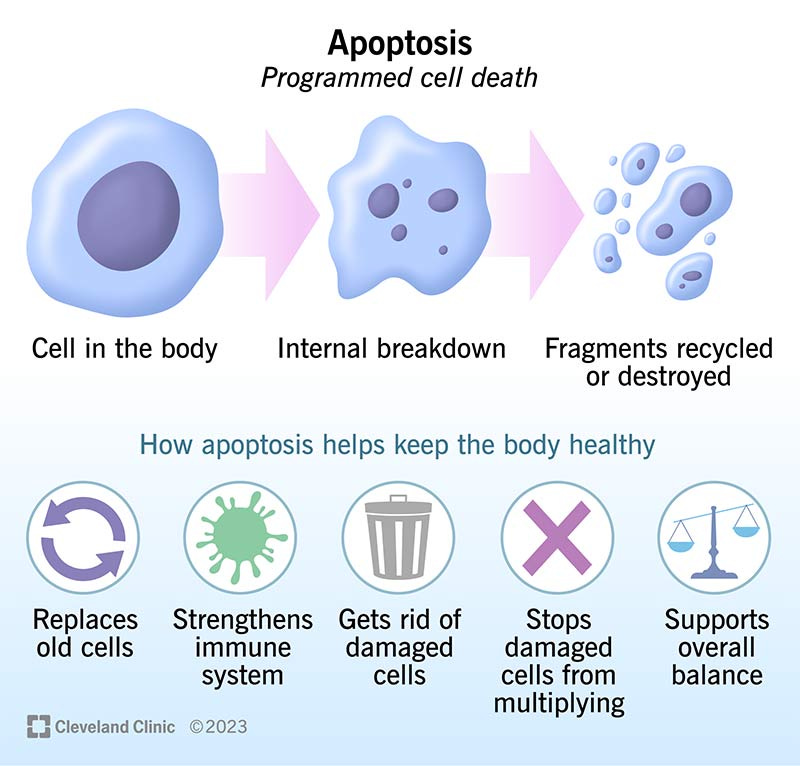
2. Induces Apoptosis (Programmed Cell Death)
Did you know that all cells have the ability to eliminate themselves by entering a process called “apoptosis”? Apoptosis is a form of guided, programmed cell death that allows the body to remove damaged, unnecessary, or potentially harmful cells in a controlled and orderly way.
For example, during embryonic development, it helps sculpt structures like fingers and toes by removing unneeded cells. In the immune system, apoptosis eliminates infected or malfunctioning cells, such as those with DNA damage, preventing them from becoming cancerous.
Turns out that EGCG triggers apoptosis in certain cancer cell lines.
3. Interferes with the tumor’s ability to form new blood vessels.
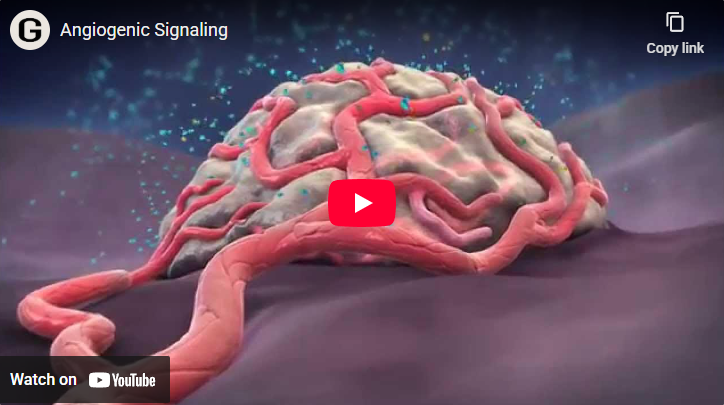
In order for a tumor to grow, two essentials are needed: blood supply and an energy supply.
So the tumor can only grow to the extent to which it can surround itself with new blood vessels. This process of recruiting blood vessels is called “angiogenesis”.
Guess what?
EGCG inhibits angiogenesis (particularly by inhibiting a molecule called vascular endothelial growth factor (VEGF). So by cutting off the nutrient supply, it induces tumor starvation and shrinkage.
4. Interferes with metastasis
For a cancer cell to spread, it must:
-
Detach from the primary tumor
-
Break through the surrounding tissue
-
Enter the blood or lymphatic vessels
-
Survive circulation
-
Exit into new tissue
-
Reattach and grow
Each step depends on specific molecular tools, and EGCG interferes with several of them (e.g. matrix metalloproteinases and integrins).
5. Reduces inflammation
Chronic inflammation fuels many cancers.
Turns out that EGCG dampens inflammation via multiple mechanisms (NF-kB, IL-6 and JAK/STAT).
But wait, there’s more!
I love EGCG for these benefits as well:
-
Anti-aging (promotes DNA repair by activating FOXO; also functions as a senolytic )
-
COVID prevention or treatment (inhibits 3CL protease and RNA polymerase)
-
Cardiovascular problems resulting from COVID infection or vaccine (blocks the spike protein from binding to ACE receptors on vascular endothelium)
-
Weight loss and/or insulin resistance (activates AMPk)
-
General antioxidant (activates NRF-2)
-
Reduces inflammation in the brain (inhibits microglial activation)
How much and how often?
EGCG is absorbed in the small intestine, but its bioavailability is modest.
For general health:
-
Drink green tea: for most people, 2–4 cups of quality green tea daily provides a steady, gentle intake.
-
Avoid adding milk (proteins may bind catechins)
For active cancer patients or others who want to be aggressive:
-
Consider purified EGCG products (typically 400–800 mg EGCG daily)
-
Caution if you have liver problems (elevated ALT or AST)
-
Taking it on an empty stomach provides higher blood levels, but has a greater risk to irritate the liver
Further Reading:
-
IMA cancer protocol, page 95
And there we have it, friends.
Wishing You and Your Loved Ones Health and Healing,
I Remain,
Very Truly Yours,